How to steam milk for latte art
No pour can save the wrong milk. For latte art you need microfoam: milk with tiny, invisible bubbles that looks like wet paint and flows like it. Here is how to make it with a steam wand, step by step.
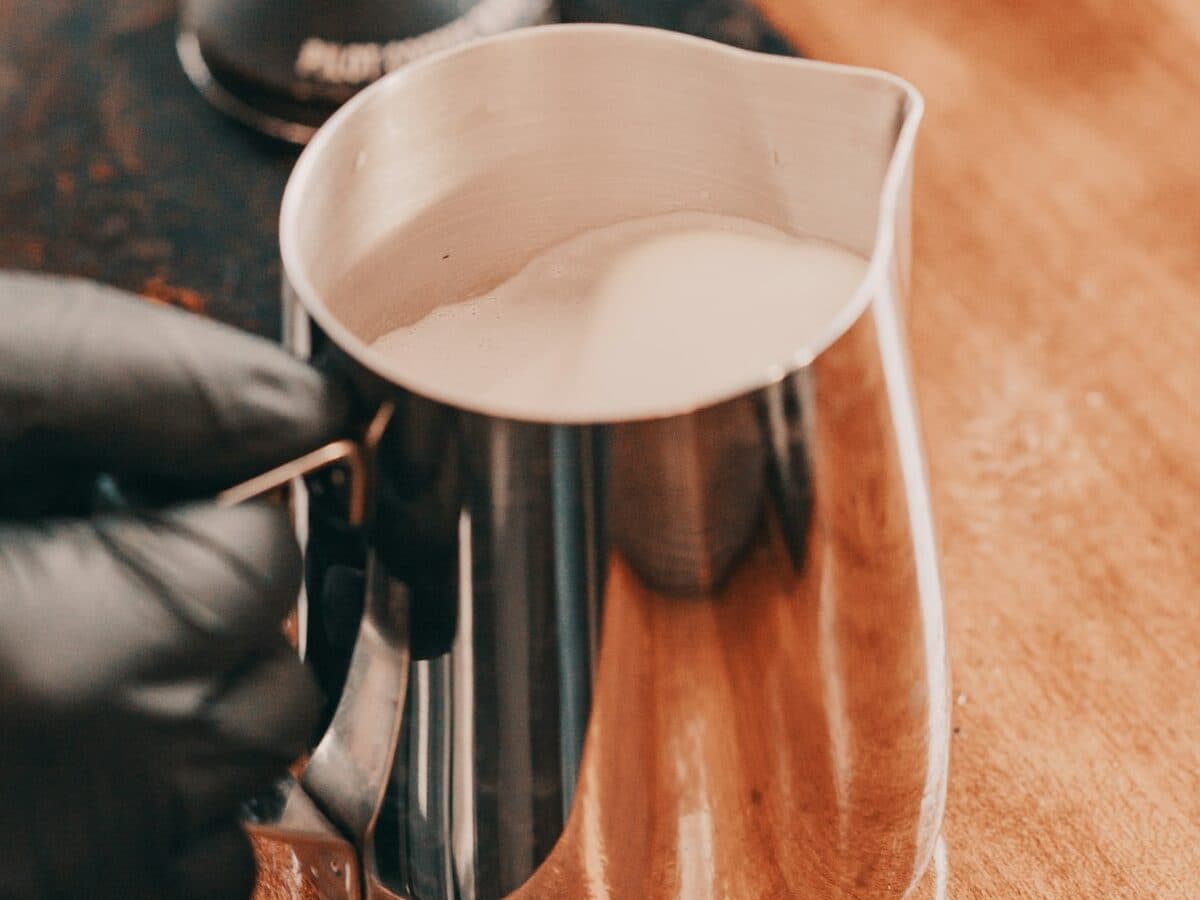
What microfoam is
When you steam milk, you do two things. You let air in, which makes foam, and you heat the milk. For a cappuccino you let in a lot of air. For latte art you let in less and break it into bubbles so small you can’t see them. The result is milk that is slightly thicker, shiny and still runs freely from the spout.
That is why steaming has two phases. Stretching adds air while the milk is still cold. Texturing spins the milk, so the bubbles get smaller and spread evenly while it heats up.
Before you start
- Use cold milk straight from the fridge and a cold pitcher. Cold milk gives you more time to stretch before it gets too warm.
- Fill the pitcher to just below the bottom of the spout, about a third. With too much milk there is no room for it to grow and spin.
- Purge the steam wand for a second into a cloth to clear out the condensed water.
- Whole milk is the easiest to learn with. Low-fat milk foams too, but the foam is drier and less stable.
Steaming milk step by step
- Hold the pitcher straight and put the wand tip about 1 cm below the surface, a little off the centre, towards the spout.
- Open the steam fully. Steam at half power makes coarse bubbles and takes longer.
- Stretch: lower the pitcher very slightly until you hear a soft, steady hiss, like tearing paper. The milk level rises slowly.
- Stop stretching while the pitcher still feels lukewarm, at about body temperature. For latte art, the volume only needs to grow a little, roughly by a quarter to a third.
- Texture: raise the pitcher a little so the tip sinks just below the surface and the hissing stops. The milk now spins in a whirlpool. Let it spin.
- Keep your hand on the side of the pitcher. When it gets too hot to hold for more than a second or two, you are at about 55 to 65 °C. Close the steam.
- Take the pitcher away only after the steam is closed, wipe the wand and purge it again.
- Tap the pitcher once on the counter to burst remaining bubbles, then swirl until the surface is glossy. Pour within a minute.
If you want to check the temperature, a clip-on thermometer helps at the start. Above about 70 °C, milk loses its sweetness and the foam starts to break down.
Common mistakes
Big bubbles and a loud screech
Why
The tip sits too high and sucks in air faster than the milk can break it up.
Fix
Keep the tip just under the surface. A soft, even hiss is right; spluttering or screeching means it is too high.
No foam at all
Why
The tip sits too deep from the start, so the milk only heats up. You hear almost nothing.
Fix
Start with the tip at the surface and listen for the hiss in the first seconds, while the milk is still cold.
Stiff, dry foam
Why
You stretched for too long. The milk looks like a cappuccino cap and sits on a spoon instead of running off.
Fix
Stop letting air in once the pitcher is lukewarm. Too much foam is the most common reason a heart turns into a blob, see why your heart turns into a blob.
Foam and milk separate
Why
There was no whirlpool, or the milk stood too long after steaming.
Fix
Find the off-centre position where the milk spins, and swirl the pitcher continuously until you pour.
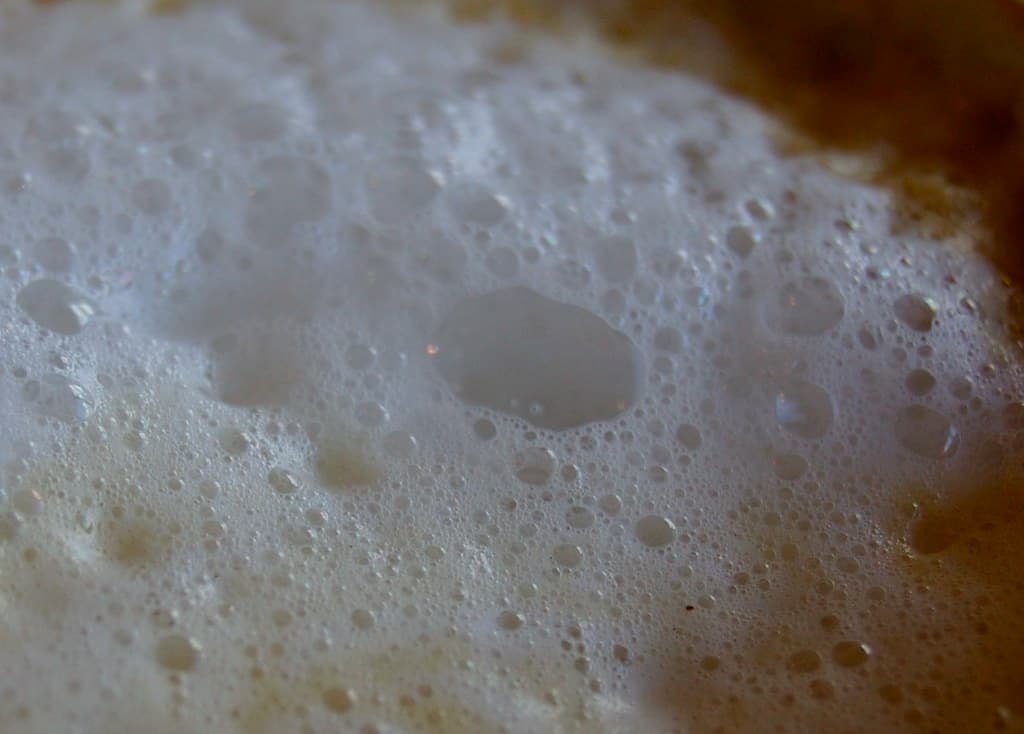
How good milk looks
Before you pour, look at the surface. Good milk is glossy, has no visible bubbles and moves in one piece when you swirl it, like wet paint. If it looks dull and foamy, it has too much air. If it is thin and splashes like plain milk, it has too little. Now you are ready for your first heart.
Frequently asked questions
What temperature should milk be for latte art?
About 55 to 65 °C. Hotter milk tastes cooked and its foam breaks down faster, which makes the pattern blurry.
How much should the milk grow while steaming?
For latte art, only a little, roughly by a quarter to a third of its volume. For a cappuccino you would let in noticeably more air.
Can I steam milk twice?
It is not a good idea. Milk that has been heated once doesn’t make good microfoam again. Steam only as much as you need for one or two cups.
My machine is small. What changes?
Small machines have less steam power. Use less milk, about 150 to 200 ml, and a smaller pitcher, and stretch a little more carefully, because the milk heats up more slowly.